

Why Choose Polyethylene Tanks Over Concrete? Four Key Reasons Poly Might Be the Better Fit for Your Property
At Lockwood Precast, we manufacture durable 5000psi precast concrete septic tanks and cisterns right here in Billings, and we’re proud of the strength and longevity they deliver for most customers. But we also stock high-quality Norwesco polyethylene (poly) tanks because we know every site is different. There are situations where poly tanks offer clear advantages in cost, ease of installation, and long-term performance.
Whether you’re planning a new septic system, adding a cistern for water storage, or replacing an existing tank, here are three practical reasons many homeowners and contractors in our region choose Norwesco poly tanks over traditional concrete.
1. Long-Distance Delivery: Lighter Weight Means Lower Costs and Fewer Headaches
Lockwood Precast concrete tanks are built tough—often weighing several thousand pounds for a standard 1,000- to 1,500-gallon size. That weight is great for stability once in the ground, but it drives up delivery expenses, especially if your property is hours away from Billings or in a more remote Montana or Wyoming location.
Norwesco poly tanks are dramatically lighter (typically just hundreds of pounds vs thousands for the same capacity). This means:
Lower transportation and fuel costs
Easier shipping or pickup without specialized equipment in many cases
Faster turnarounds for contractors since you can pick them up here
If your project is in a rural area or requires a long haul, poly tanks can save you real money on the delivery leg alone—savings we can pass along because we carry Norwesco tanks in stock.
2. Challenging Locations: Easier Installation Where Access Is Tough
Not every backyard is wide open with room for a boom truck and/or heavy equipment. Many properties in our service area feature steep slopes, tight driveways, rocky terrain, or limited space around existing structures.
Poly tanks shine here because of their lightweight design:
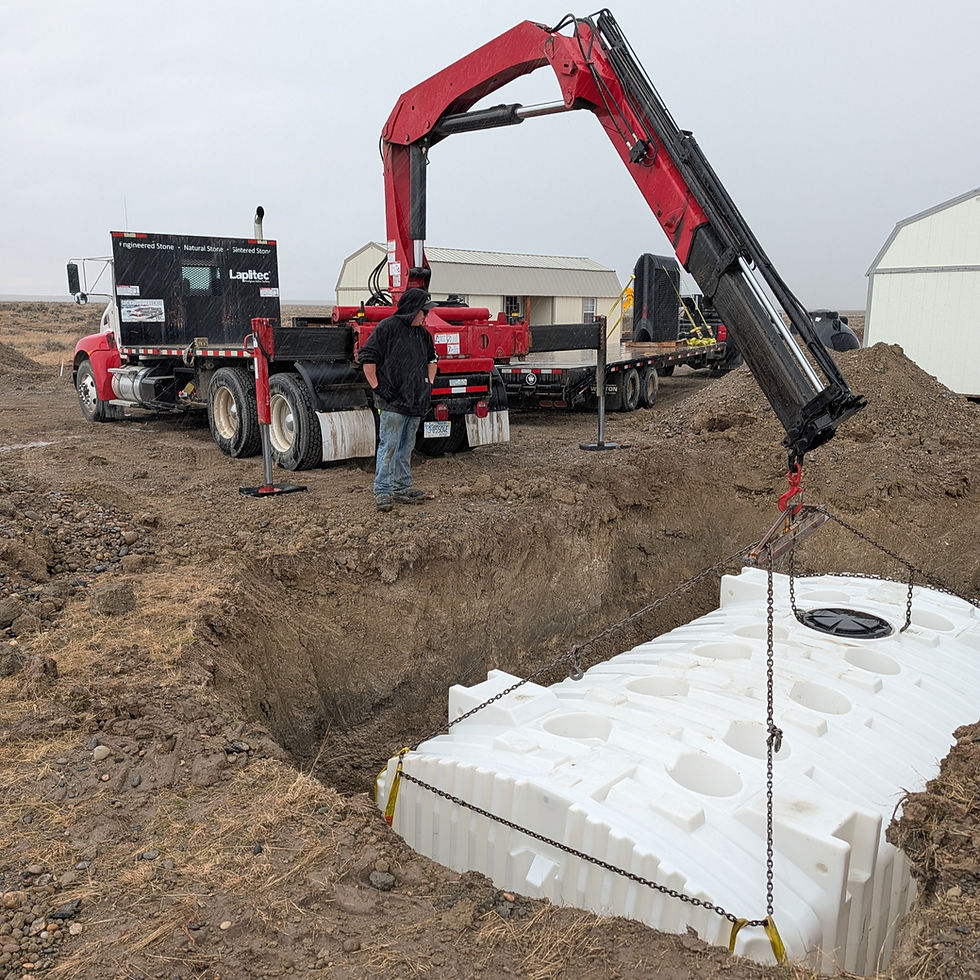
A small crew can often maneuver and set them without heavy machinery
They’re flexible enough to navigate narrow access points or uneven ground
Installation is quicker and requires less site preparation
Lockwood Precast concrete tanks, while excellent in open, flat conditions, usually need a large boom truck or excavator with significant lifting capacity. When your site is challenging, that extra equipment and labor add up fast. Poly tanks let you get the job done efficiently and with minimal disruption to property.
3. High Soil Alkalinity: The Lesser-Known Reason Poly Tanks May Last Longer
Here’s something many property owners don’t realize until it becomes a problem: certain soils in our region can be aggressive toward concrete. High soil alkalinity—often combined with elevated sulfate levels common in parts of Montana and surrounding states—can trigger a chemical reaction known as sulfate attack.
Over time, sulfates in the soil react with components in concrete, causing:
Expansion and cracking
Surface softening and spalling
Reduced structural integrity
This external chemical attack can shorten the lifespan of even the best precast concrete tank if the soil conditions are particularly harsh. (Internal corrosion from hydrogen sulfide gas is another issue concrete can face, but soil chemistry is the hidden external threat.)
Norwesco polyethylene tanks are completely inert. The high-density polyethylene material doesn’t react with soil chemistry, high pH levels, sulfates, or moisture. It simply won’t degrade from the soil surrounding it. That makes poly the smarter, worry-free choice in areas where soil testing shows elevated alkalinity or sulfate content—conditions that aren’t always obvious until years down the road.
4. Need for Larger Capacity? Single Storage Tanks Up to *20,000 Gallons
Our largest Lockwood Precast concrete tank is 2,000 gallons. For higher storage or treatment needs, multiple concrete tanks can be plumbed together in series. However, because of their weight and size, we can typically only deliver and set one concrete tank per truck trip. That means multiple deliveries, more boom truck time, and added labor and scheduling complexity.
Norwesco tanks solve this neatly. They are available in much larger single-tank capacities — up to *20,000 gallons for certain cistern and holding tank models. With one large tank, you get:
Simpler installation (just one tank to set)
Fewer delivery trips and lower overall delivery costs
Reduced site disturbance and faster project completion
This makes Norwesco tanks especially attractive for larger residential properties, ranches, commercial projects, or any application needing substantial water storage or septic capacity without the hassle of multiple tanks.

*10,000 15,000 and 20,000 gallon tanks are available but do require additional information, pre-ordering, and manufacturing time. If you are interested in a large capacity tank, please reach out to our team.
The Bottom Line: We Offer Both Because Both Have Their Place
We don’t push one material over the other. Lockwood Precast concrete tanks remain the gold standard for strength and proven long-term performance in standard soil conditions. But when delivery distance, site access, or challenging soil chemistry come into play, Norwesco poly tanks deliver practical advantages that can save you time, money, and future headaches.
Our team is happy to review your site specifics and project needs to help you choose the best tank for your property. Whether you go concrete or poly, you’ll get the same Lockwood Precast commitment to quality products and responsive local service.
Ready to talk tanks? Give us a call or visit lockwoodprecast.com to learn more about our precast concrete and Norwesco polyethylene options. We’re here to make your septic or cistern project straightforward and built to last.


Comments